

CHINA: THE THREE MINDS

Welcome to Cosmographia — a newsletter uncovering the deep roots of a turbulent world. For the full map of posts, see here.
This is the second in a series of posts on the history and culture of China. Read the first part here.

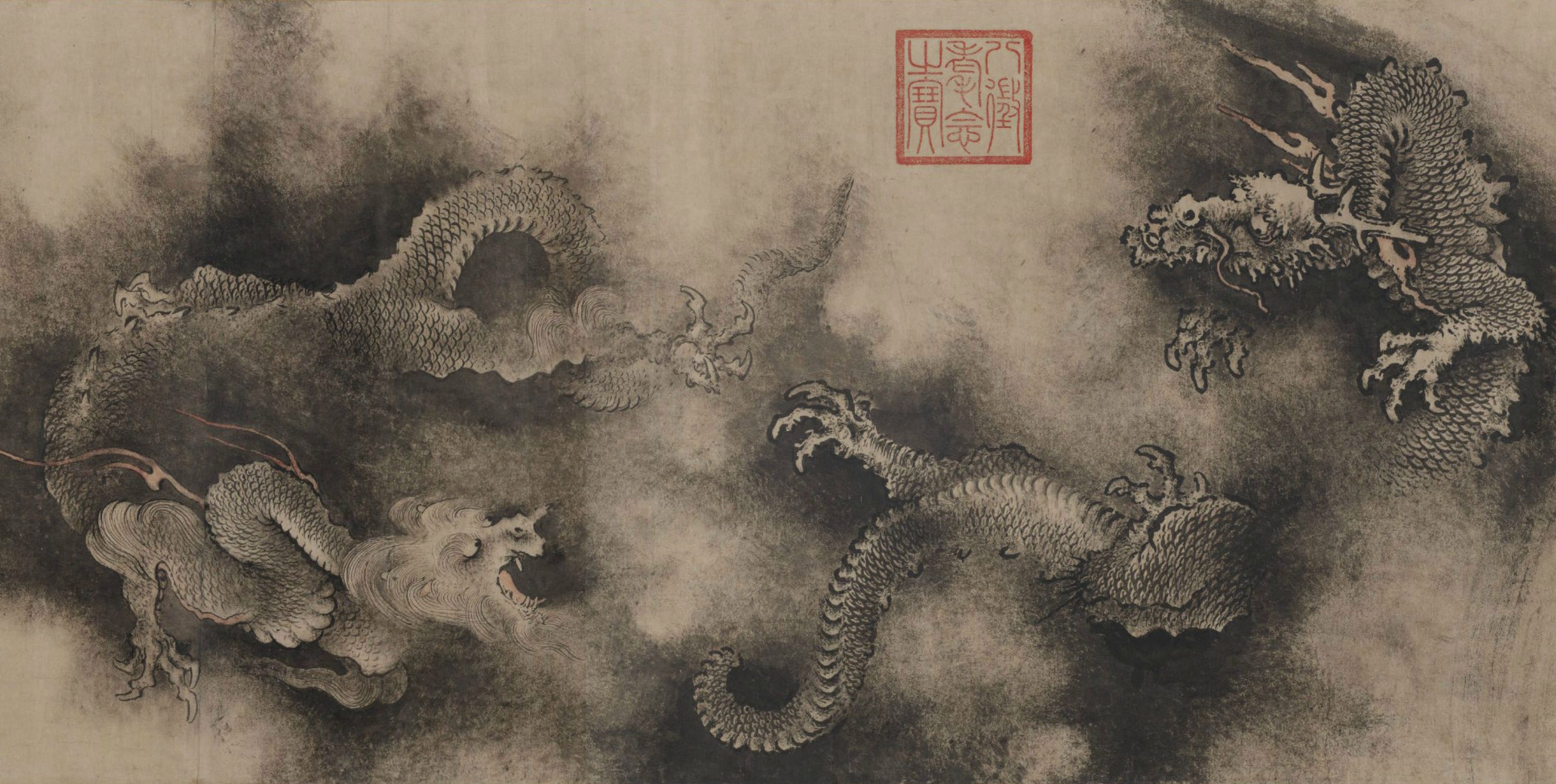
To understand the West, one must reckon with the interwoven inheritances of Athens and Jerusalem. To understand modern Iran, one must grapple with the dualism of Zarathustra, the grief of Karbala, and the imperial humiliations of the 19th and 20th centuries. And to understand China, one must look back to a single, extraordinary burst of intellectual productivity, two and half millennia ago.
Out of the chaos of the collapsing Zhou dynasty, scholars across the Yellow River basin found themselves displaced from the state bureaucracies in which they had once plied their trade. They turned instead to the key question of their time: how to end the instability now engulfing their lands? Of the so-called ‘Hundred Schools of Thought’ that competed for influence amid the tumult, three rose above the rest. Confucius called for the centring of ritual and filial piety, the turning of the state into a vast moral family. Laozi preached the importance of following the natural order of the cosmos, or the Tao (the Way). Han Fei believed that people are governed by neither virtue nor restraint, but by strict laws, clear rewards, and fear.
Just as Western liberal democracy is fundamentally rooted in the philosophical rationalism of ancient Athens and the moral universalism of Jerusalem, China’s political philosophy is still today largely defined by the terms set out in those three strands of thought. When Xi Jinping talks of ‘harmony’ and ‘a community with a shared future for humanity’, he is invoking Confucian ideals. When Deng Xiaoping during his economic reforms argued that the Party should ‘cross the river by feeling the stones’, he was referencing an ancient Taoist principle. Han Fei, meanwhile, would have enthusiastically approved of the construction of the most sophisticated surveillance state in history, and its accompanying social credit system, all in the name of maintaining social order. These three conflicting philosophies are in large part the “Chinese characteristics” in the oft-quoted party line of the CCP, “socialism with Chinese characteristics”.
China is of course such a vast, sprawling behemoth that one could spend a lifetime studying its culture and still not fully comprehend it. That being said, if one can understand these three schools of thought - Confucianism, Taoism, and Legalism - one finds a large part of Chinese history, and the Chinese present, suddenly becomes comprehensible. In this essay we will explore the story of the three men credited with their founding, and the core ideas that have shaped Chinese society ever since.
