

Into the Baobab Tree

Recently I at long last returned to my beloved Zambia for a friend’s wedding. I cannot describe the melancholic joy of seeing once again the tangle of Lusaka’s streets, the sun-drenched grasses of the savannah, the thundering smoke of Victoria Falls, the faces of long-parted friends. It would have been a glorious nostos but for a haunting incident near trip’s end.
During the last few days in country I tried to visit the swamps of Bangweulu to see where Livingstone’s heart lies buried under a mpundu tree. Unseasonal rains and poor roads waylaid our party and we never made it to our destination. Not wanting to continue driving on in the dark we stopped for the night in a remote and ramshackle village. We spent the evening under a corrugated iron veranda drinking beer and eating strips of dried goat meat while thousands of insects made unholy cotillion around the sole floodlight in otherwise total darkness. Kangwa, our host, was both shocked and delighted to have a mzungu (white man) staying in his motel, and could not stop offering me drinks and snacks - another beer, mzungu? a cup of tea? a shortbread biscuit? a bowl of mopane worms? Despite my protestations he insisted I stay in the ‘best room’ - deemed such by the fact it was furthest from the foul-smelling latrines that lay at the back of the u-shaped concrete courtyard.
Sometime in the night the beer caught up with me and I had to make a trip to the dreaded loos. On the way back to my room I stopped awhile under the heavens to look up at the stars, which never in my life had seemed so bright and unspoilt. As I stood there I felt a presence at my periphery and I turned and saw Kangwa beckoning me forth. I followed him out beyond the courtyard and into the starlit bush, threading past thorny shrubs and acacia trees, I the whole while praying we didn’t disturb any snakes in the dark.
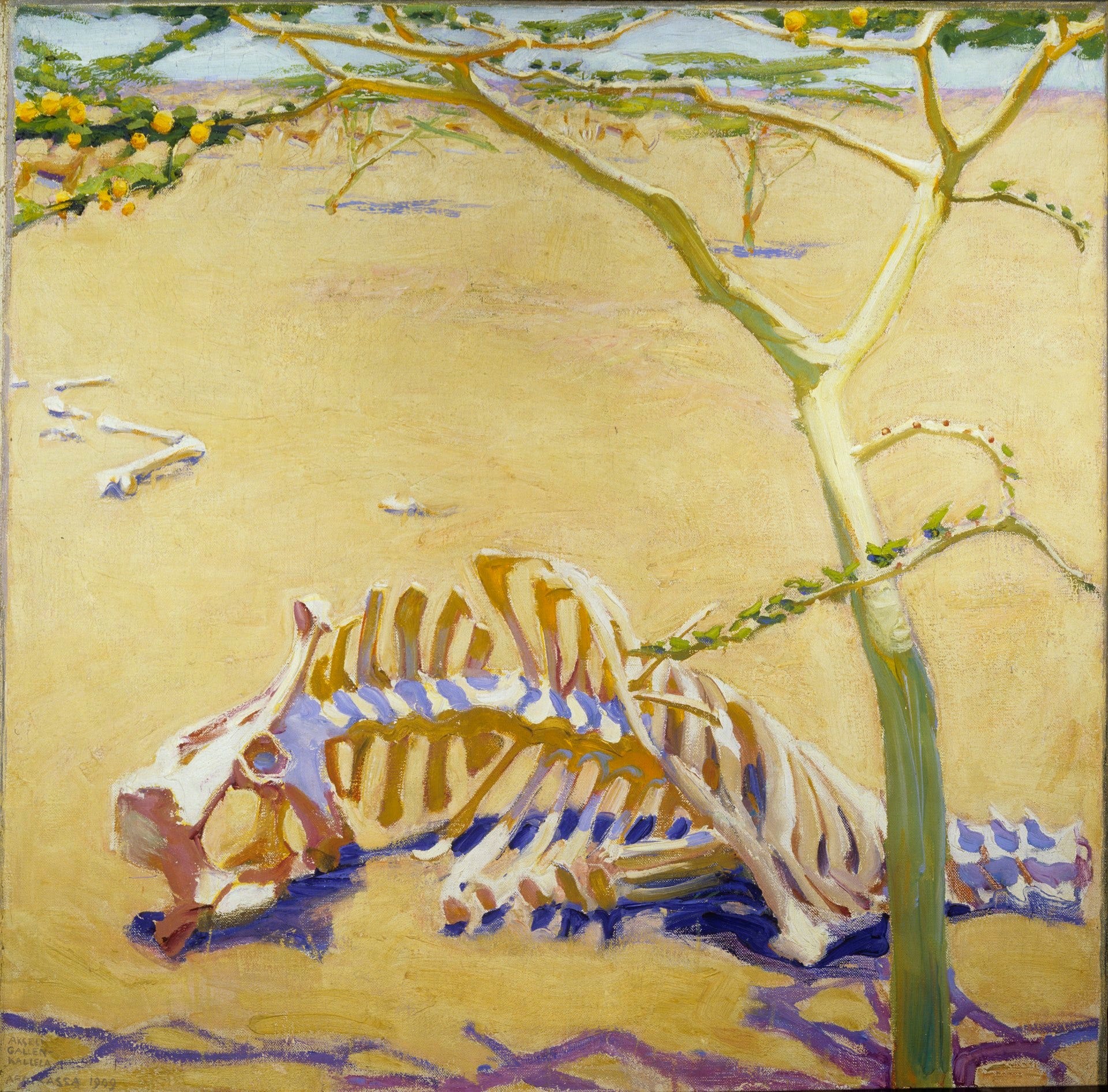
After a few minutes walk we came to a clearing of sorts and there squatting under the spindly boughs of a great baobab tree was a ng’anga. I had heard tale of these shamans before but though I had never seen one myself I knew in an instant that this is what he was. He wore a headdress of leopard skin from which dangled countless jangling strands of beads. Around his eyes was painted a ghostly chalk and red ochre was streaked across his forehead. He was naked but for strips of skin wrapped around his elbows, loins, and knees. Kangwa indicated I must give him something and after leafing through my pockets I proffered a hundred Kwacha note. With that the ng’anga bade me spit into the dust at his feet and threw upon the saliva an assortment of bones which clicked and clacked as they fell to the ground. He gazed upon the skeletal strew a moment and then in a low voice read my fortune. You have lived many lives, he said, but this one is to be your last. There was more to his muttering but I cannot now tell you what it was. Needless to say the whole episode unnerved me greatly.
On the drive back the next day I reasoned the opportunistic Kangwa must have staged the scene for a bit of extra coin. That was the only explanation. But since returning home to Scotland I have been beset by increasingly strange and vivid dreams. They always begin back at that baobab tree. Its vast trunk stands before me. I climb inside, and in so doing become another man. I have dreamt I was a mason laying the walls of Babylon; a San huntsman stalking an eland on the Kalahari; a Norse oarsman heaving up the Ob.
I know not what these visions mean but I feel myself disintegrating, as if I am no longer one man, but many men.
