

Mercury

Welcome to Cosmographia — histories of the earth and the stars. For the full map of posts, see here.


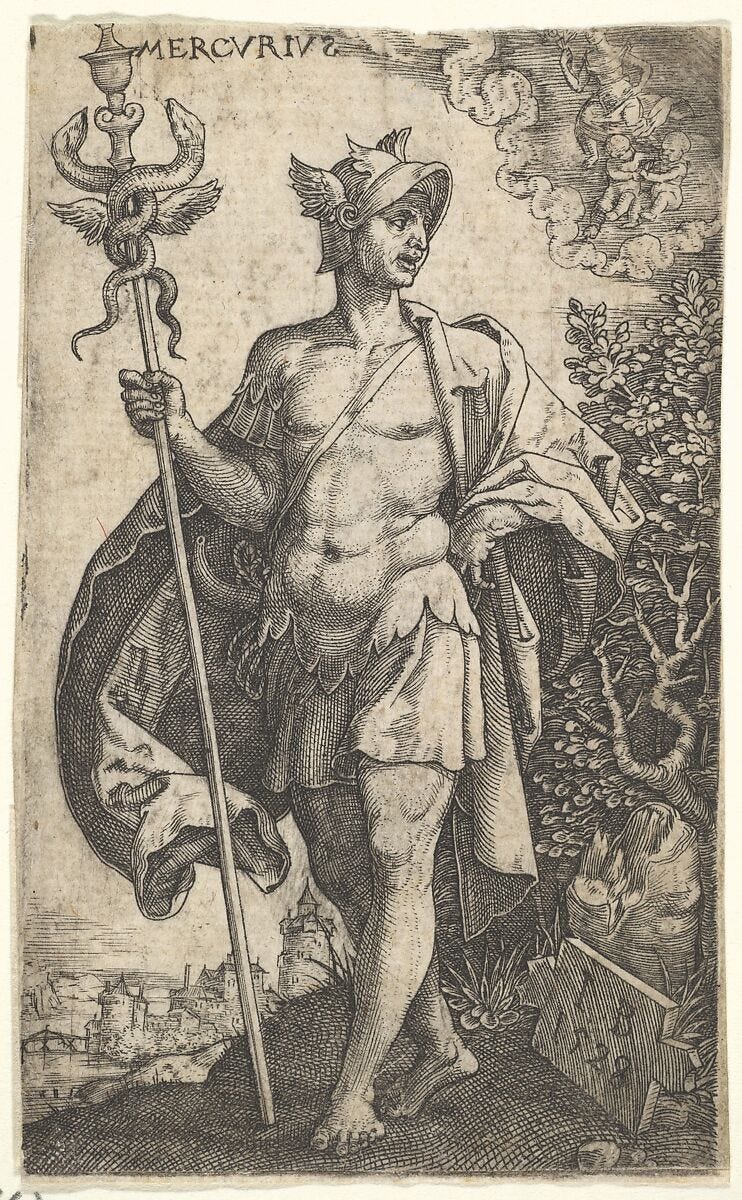
Mercury is the smallest and innermost planet in our solar system. It is also the quickest to orbit the Sun, a fact noted by the ancient astrologers of Babylon, who referred to it on their tablets as “the jumping one” as they traced its erratic movements across the stars. The Romans meanwhile thought it their fleet-footed messenger god.
The Roman figure of Mercury, who played the crucial intermediary between Jupiter and Aeneas in Virgil’s greatest epic, The Aeneid, was the deity of commerce and trade. For this reason he was often depicted holding a bag of coins alongside the caduceus, a staff formed of olive branches and snakes, which symbolised peace.
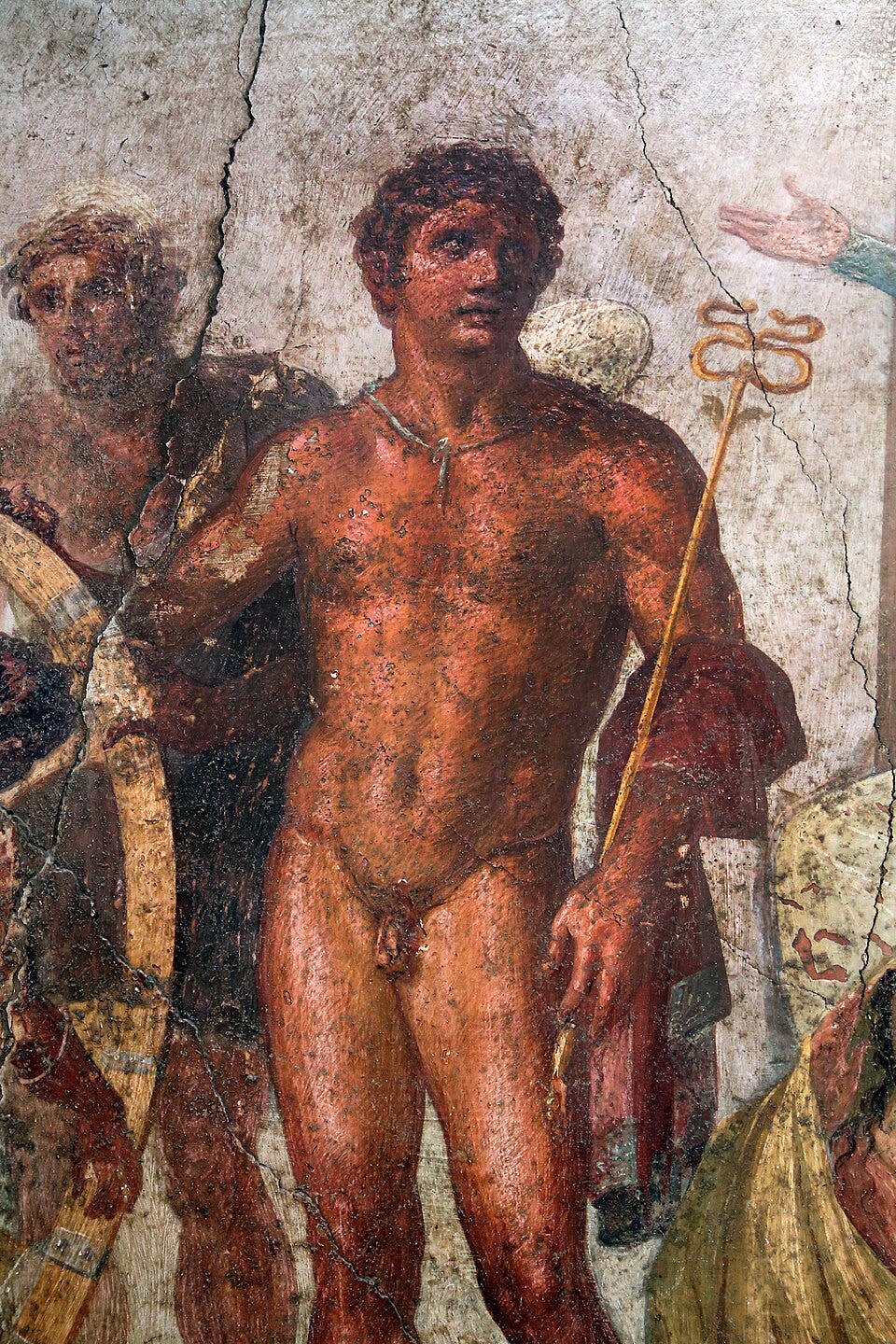
The Roman deity derived originally from the Greek Hermes, who was among the oldest attested gods in the Aegean pantheon, appearing in Hesiod and Homer, and mentioned by an older name on Mycenaean Linear-B tablets. Indeed, Hermes himself is probably a later iteration of a pre-Hellenic god, one lost to us behind the misty veil of prehistory.
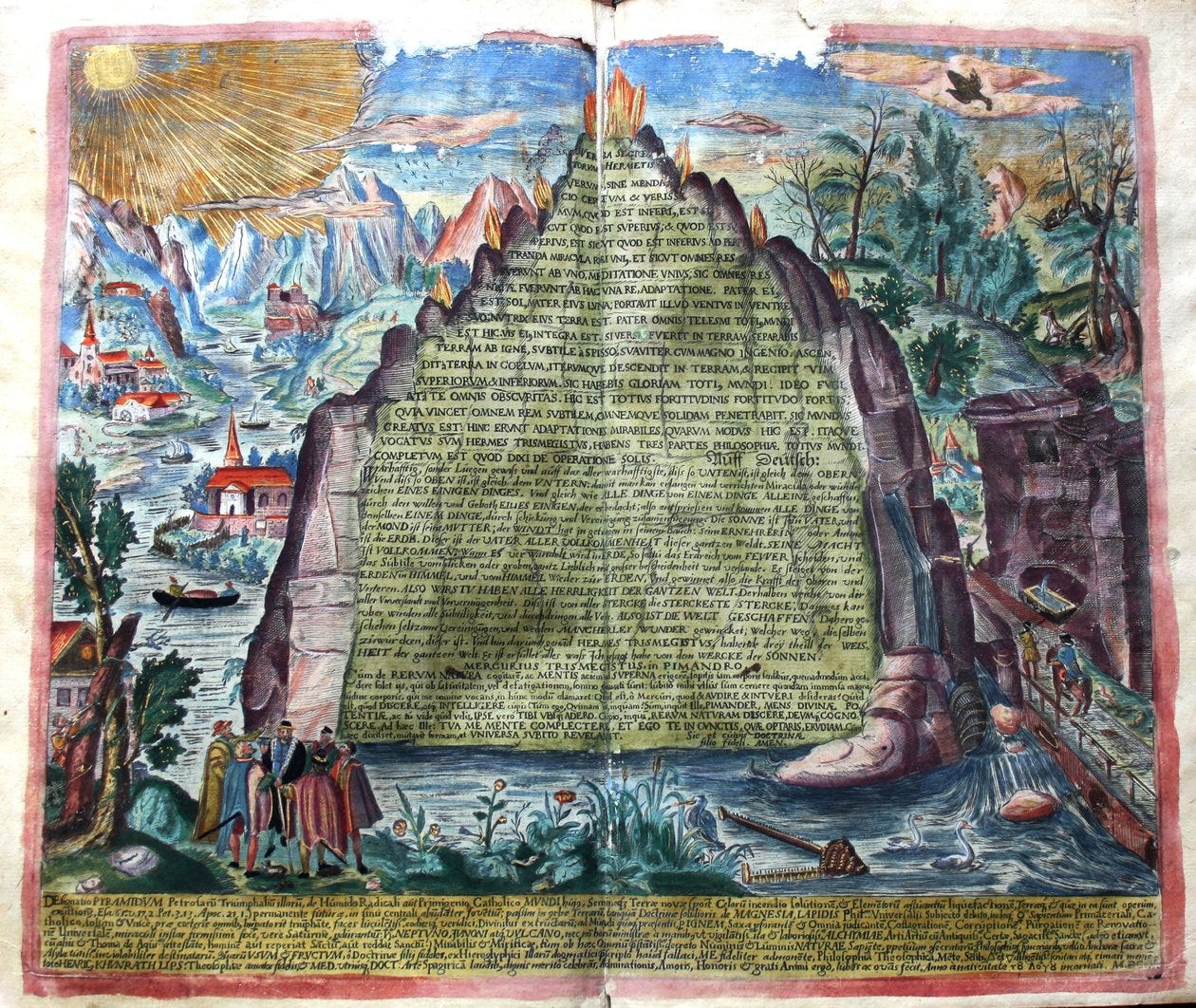
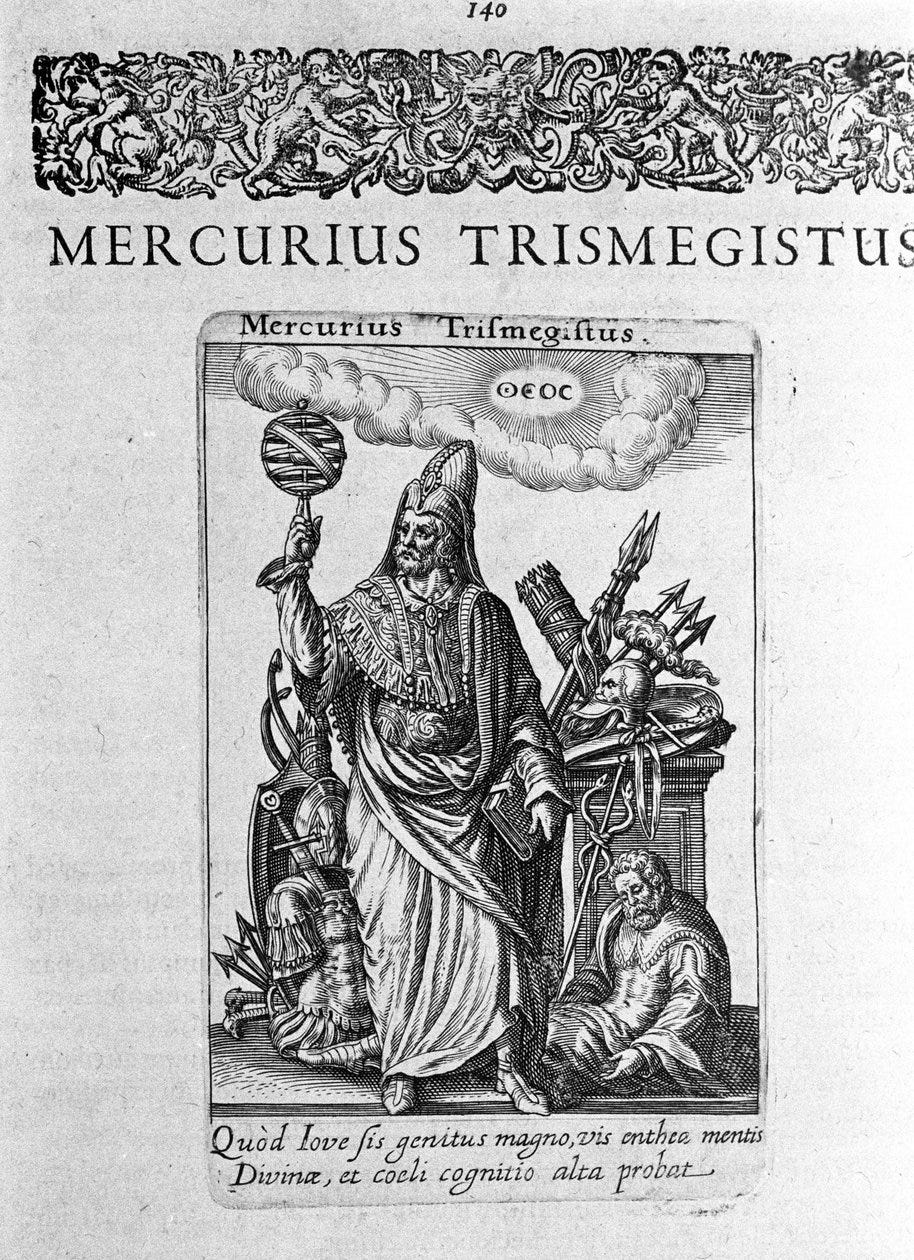
Alexandrian Greeks would later reimagine the ancient deity as Hermes Trismegistus — the “thrice-greatest Hermes” — a syncretic figure to whom was attributed the Hermetica, a collection of medieval pseudepigrapha that for many alchemists and sorcerers formed the foundational text of their dark arts. Mixing their metals and muttering their incantations, the astrologer-magickians of the Middle Ages noted the wet and shining lustre of the liquid they knew both as quicksilver, and because of its invisciditude, Mercury (☿). Building on the work of the Arab philosopher, Jābir ibn Ḥayyān (c. 721-816), Paracelsus (1493–1541) elevated the metal to one of his Tria Prima (Three Primes), which alongside the four classical elements of Earth, Water, Fire, and Air, and the other two primes, Sulphur and Salt, formed the basis of all matter.
The homonyms of metal, planet, and god were not to the alchemists a coincidence, but a sign of their cosmic interdependence.

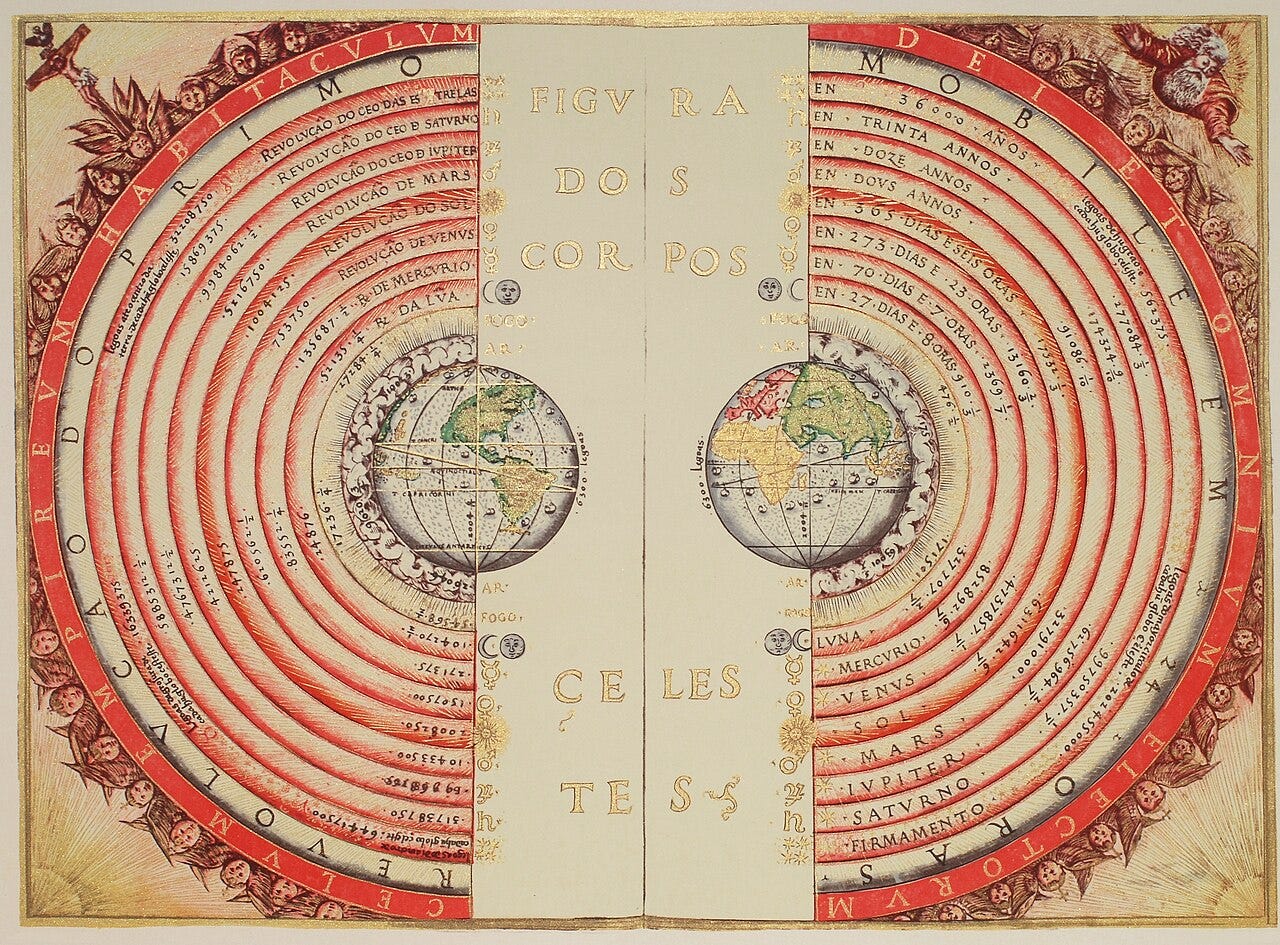
Following the Ptolemaic conception of the cosmos, Dante placed Mercury in the second celestial sphere of his Paradiso. Here were placed souls who had served God faithfully, but not always perhaps for the right reasons.
Shakespeare meanwhile uses Mercury as something of a reality principle in Love Labour Lost, the play that serves as the closest the Bard ever got to literary criticism. Concerned with the use and abuse of language, the play ends with the line, “The words of Mercury are harsh after the songs of Apollo. <You that way; we this way.>” In Twelfth Night, Shakespeare invokes Mercury in a zodiacal sense, “Now Mercury endow thee with lying,”, and in Winter’s Tale, the planet’s appearance has similarly negative connotations: “Who, being as I am, littered under Mercury, was likewise a snapper up of ill-conceived trifles.”
In Keats’ masterwork “Lamia”, the “ever-smitten Hermes” plays a leading role, leaving empty his “golden throne, bent warm on amorous theft,” following the rumour of a nymph more beautiful than all the rest. For once Hermes is acting on his own behalf, rather than on that of other gods.
H.D.’s “Hermes of the Ways” meanwhile invokes the god as lord of the wayfarers:
But more than the many-foamed ways
Of the sea,
I know him
Of the triple path-ways,
Hermes,
Who awaiteth.
Despite the two planets who orbit in between, the speed of Mercury’s revolution around the Sun means it is it which is most often the closest planet to us here on Earth. And as Mercury moves alongside us it appears sometimes as if its motion across the sky reverses — the so-called retrograde motion that has for millennia been recognised by astrologers as an omen of ill portent.
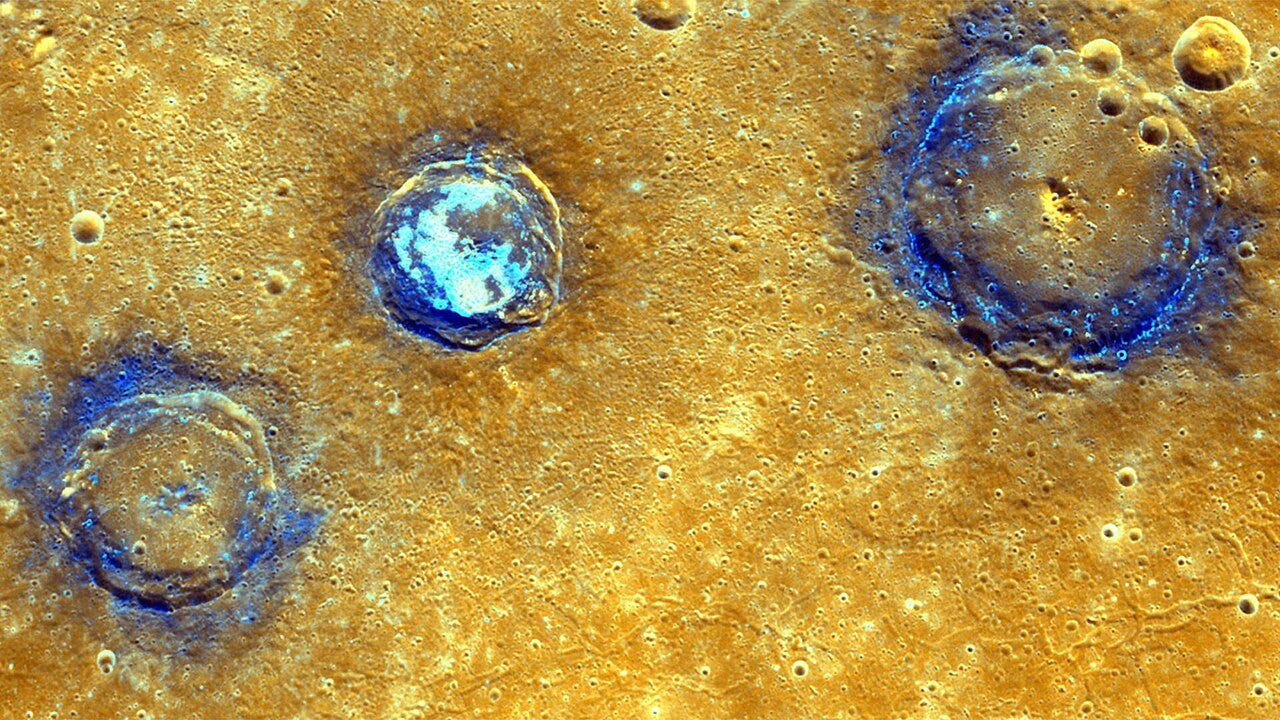
Though fast moving, Mercury spins on its axis very slowly, meaning its 88-earth-day year is shorter than its 176-earth-day day. Its surface is pockmarked with the craters of celestial missiles long-since hurled from beyond its meek atmosphere and weak magnetic field. It is fitting that among the metallic compounds that form 70% of the planet’s mass is its namesake, Mercury, the chemical element, albeit in only trace amounts. Despite its proximity to the Sun, Mercury’s slow rotation means its equatorial regions experience long bitter nights of −170 °C (−270 °F) and exhausting, scorching days of 420 °C (790 °F). With only the most minor of axial tilts, the planet’s poles lie in eternal shadow, which has led some to wonder if perhaps frozen water survives in its frigid polar regions.
Long thought to have orbited the earth in the second celestial sphere, Copernicus recognised Mercury as the planet closest to our star in his 1543 heliocentric model of the solar system. One hundred years later, after centuries of appearing to Man only in the early morning or early evening, it was Pierre Gassendi who first watched through a telescope the procession of the rocky world across the face of the Sun in 1631. And it was when studying Mercury in 1847 that Urbain Le Verrier noticed its slow precession before the Sun could not be explained by Newtonian physics, a puzzle not resolved until Albert Einstein’s General Theory of Relativity.
In more ways than one, Mercury has long been the messenger between worlds.
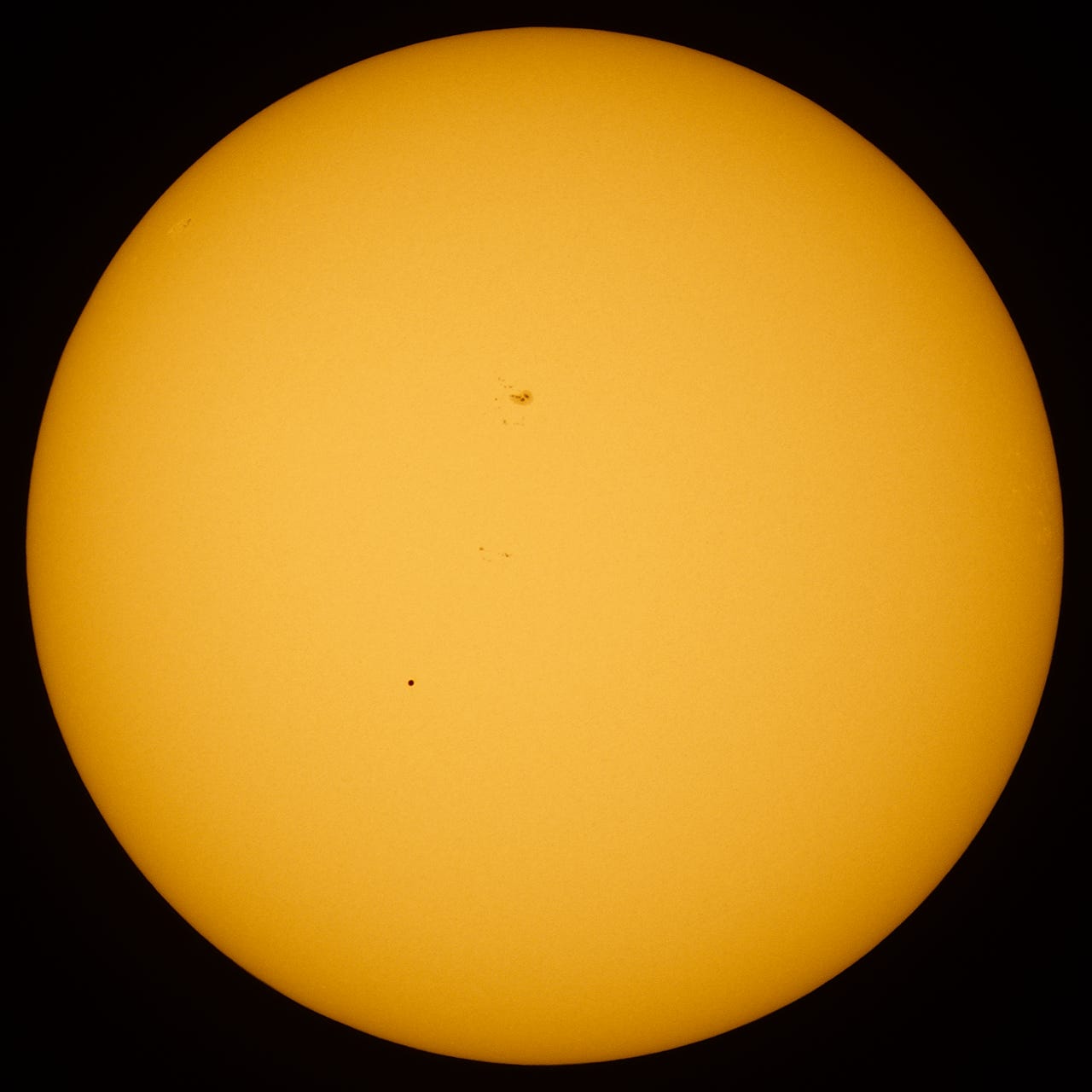
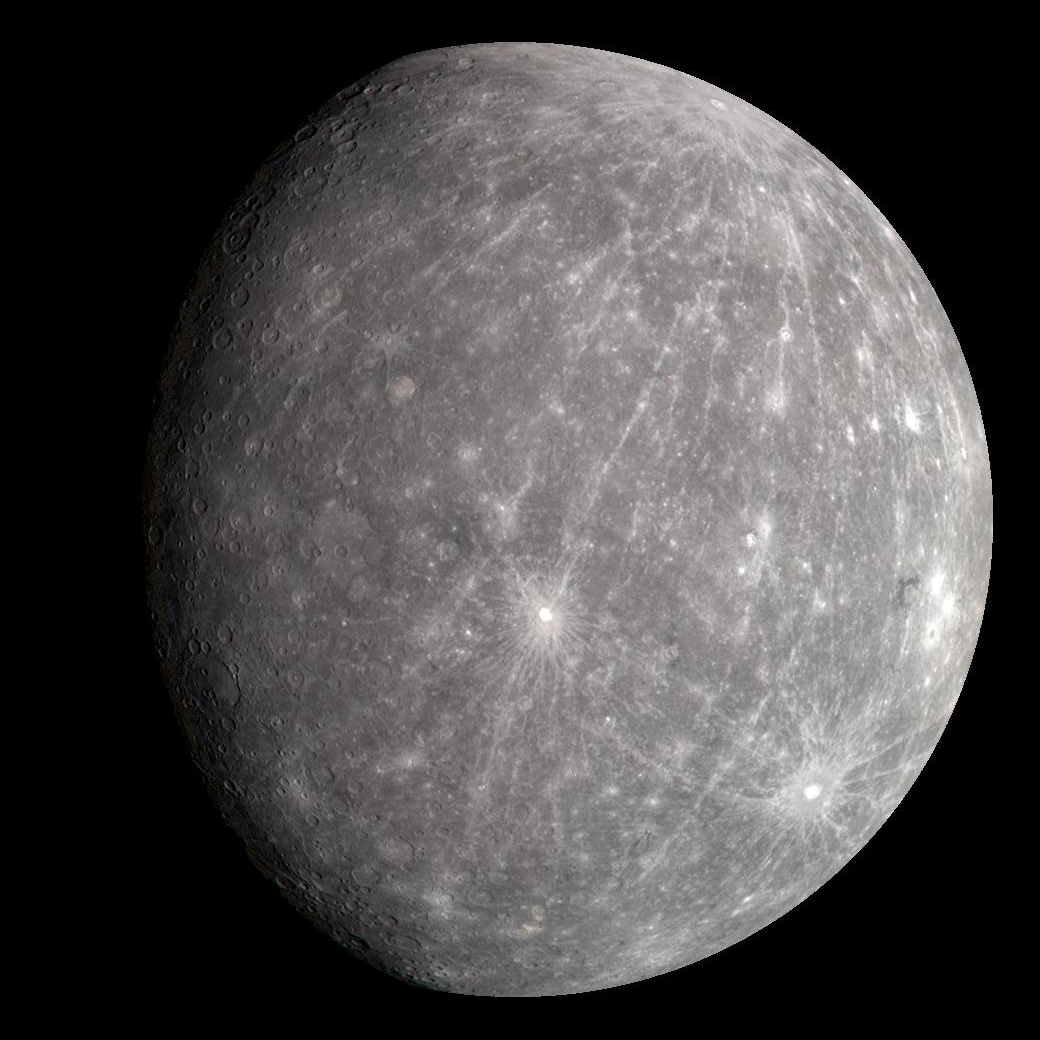
I had rather be Mercury, the smallest among seven, revolving round the Sun, than the first among five revolving round Saturn.
— Johann Wolfgang von Goethe (1771)

Thank you for reading. If you’d like to support this work and learn more about the world, please consider taking out a paid subscription. You’ll get:
3x articles per week on art, history, and mythology
Unlimited access to the entire archive (250+ articles and essays)
I shall on your behalf offer sacrifice upon Mercury’s altar, bringing you great favour in trade and commerce

In the modern world, his name has been used for, among others, a toxic element, an automobile, and a very successful audio record company.
Fascinating article. And so apt that you drop it on a Wednesday, aka Mercury's day, Mercredi.
Hermes Trimegistus was also a combination of Hermes with Thoth, Egypt's god of wisdom and writing, making him thrice great.