

Uruk: The Nearly Cities

Welcome to Cosmographia — a history of the earth and the stars. For the full map of posts, see here.
This is the second part of a series on Uruk, the world’s first Great City. You can read part I here.

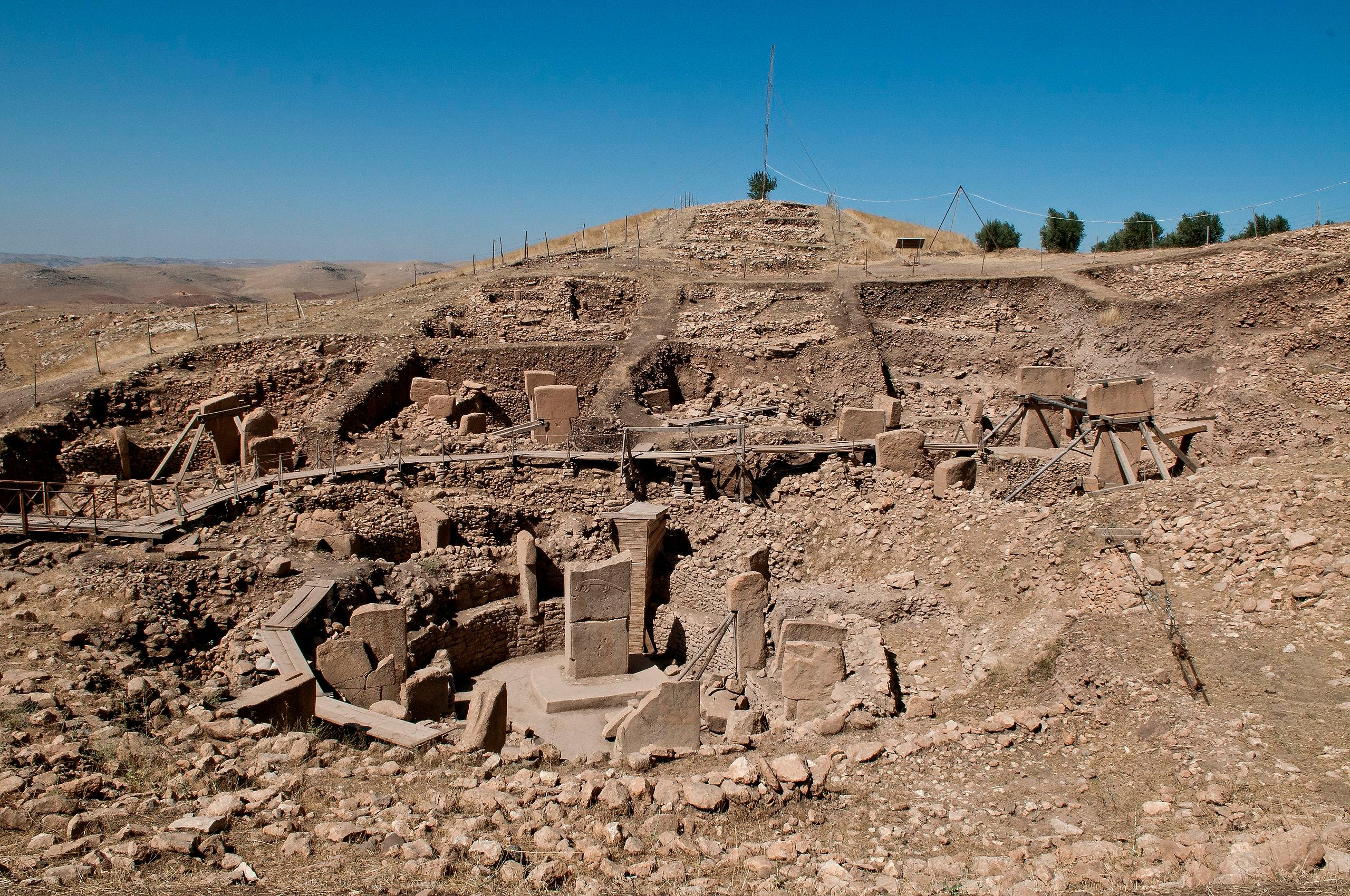
In the foothills of the Taurus Mountains, in what is now southern Turkey, lie the ruins of an unusual archaeological site. Göbleki Tepe, as it is known, meaning ‘Pot-bellied Hill’, is a Pre-Pottery Neolithic site, famous for its rings of giant T-shaped megaliths, the oldest ever discovered. These pillars weigh as much as 50 tonnes each and are decorated in carvings of people and wild animals, like foxes, snakes, and leopards, suggesting that, like Stonehenge in Britain, these megaliths were of ritual significance. They are 11,000 years old.
At first, the archaeologists excavating the site presumed people couldn’t have lived at Göbleki Tepe for lack of nearby water, believing instead that nomadic hunter-gatherers could only have built the complex for religious purposes. If true, this claim would upend our understanding of ancient history – perhaps civilisation, with its sophisticated building, its complex religion, its ability to corral large numbers of people to work together, came before agriculture, and not the other way around, as had been long believed.
More recent discoveries have tempered this paradigm shift slightly. Sophisticated water capture systems connected to underground cisterns show that, actually, the builders of Göbleki Tepe had solved the local water problem. Archaeologists have also uncovered the unmistakable signs of dwellings. People did live here. But were they hunter-gatherers? Well, the answer is probably neither a simple yes or no. They undoubtedly hunted many of the prey animals they carved onto their megaliths – boars, wildfowl, cranes. But there are signs of grain processing too: rudimentary grindstones, hearths, and huge limestone vessels that may have been used to store grain, have all been uncovered at Göbleki Tepe. Some of the troughs have shown trace signs of fermentation, suggesting perhaps the brewing of beer. It’s worth saying that at this point that only a small portion of the site has been fully excavated, so there’s still so much we don’t know. However, it appears at this stage that Göbleki Tepe, and a few other nearby sites, are what we might call ‘transition settlements’ – built by people that were somewhere between hunter-gatherers and a farming community. They were likely occupied only part of the year. Perhaps their builders spent the more bountiful seasons out among the hills hunting their game, living on the move, retreating back to the confines of their houses and megaliths only in the leaner months, when they had to resort to rudimentary agriculture, and placating the gods, to feed themselves.
A few millennia after the abandoned Göbleki Tepe was mysteriously covered over with earth, the town of Çatalhöyük [pronounced Chatal-Huyuk] a few hundred miles to its west was booming. Here, a collection of square mud-brick houses were built right up against one another into a structure resembling a cubist honeycomb. Composed entirely of houses, with no public or communal spaces, the town had no streets. Instead, its inhabitants, who may have numbered as many as 8000, reached their homes via ladders and beams stretched across the town’s roofs. The interior of these dwellings were often decorated with painted walls and carved bull heads, while signs of long distance trade are evidenced by their possession of obsidian tools, a material not found nearby. In a practice that would later be emulated elsewhere in the towns and villages of the Near East, the Çatalhöyükians would bury their dead beneath the floors of their homes, suggesting some form of ancestor worship.
Both Göbleki Tepe and Çatalhöyük can be seen as the first tentative steps on the road to full urbanisation. Indeed, elsewhere, small villages and towns were appearing all over the Fertile Crescent, made possible by the calorific surplus provided by agriculture. Trade was conducted between these settlements. Some, like Tell Brak in Syria, even began to blossom into minor urban centres. As the region began to densify, it would be only a matter of time before one would make the leap and become the world’s first metropolis. But to do so, it would need a helping hand from geography.

Thank you for reading. If you’d like to support this work and learn more about the world, please consider taking out a paid subscription. You’ll get:
3x articles per week on art, history, and mythology
Unlimited access to the entire archive (250+ articles and essays)
A 16th-century woodcut of Edinburgh for your wall (for annual subscriptions only!)
