

Cappadocia
Atlas’ Notebook: Edition LVII

Welcome to Cosmographia. The following is part of our Atlas’ Notebook series, featuring art, poetry, literature, cartography, and photography, all centred on a particular place. For the full map of Cosmographia posts, see here.
Cappadocia’s name belies its great age. It comes from the ancient Hittite (2nd millennium BC) ‘katta peda’, meaning ‘down below’.
Lying on a great plateau of the Taurus Mountains of Central Anatolia, Turkey, the historic region was once a great kingdom in its own right. Its borders have never been well defined, particularly in the west, probably because it spent the better part of its history as a province of the Hittite, Lydian, Persian, Macedonian, Roman, Byzantine, and Ottoman empires, and is mentioned by name in the Bible, Herodotus, and Strabo.
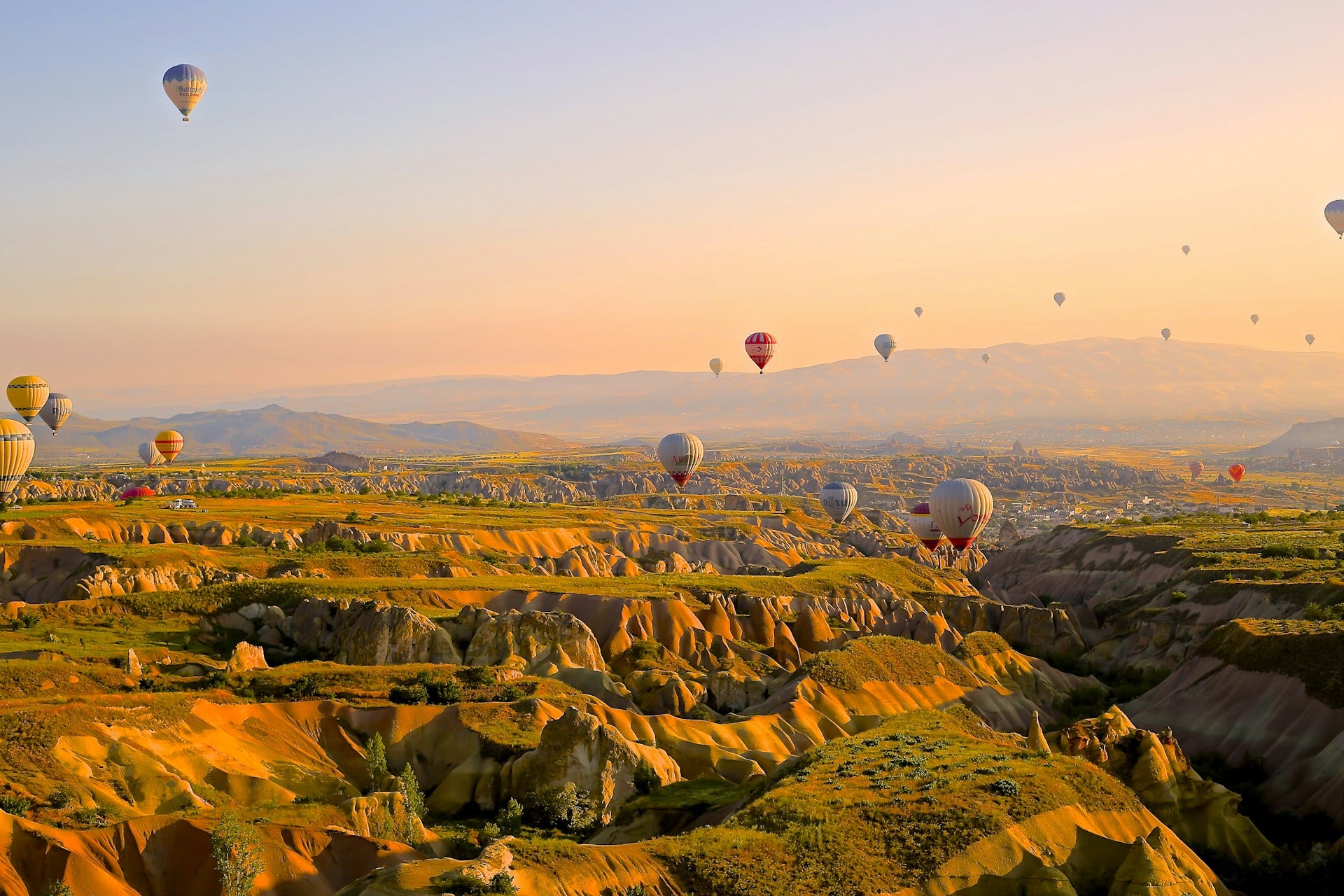
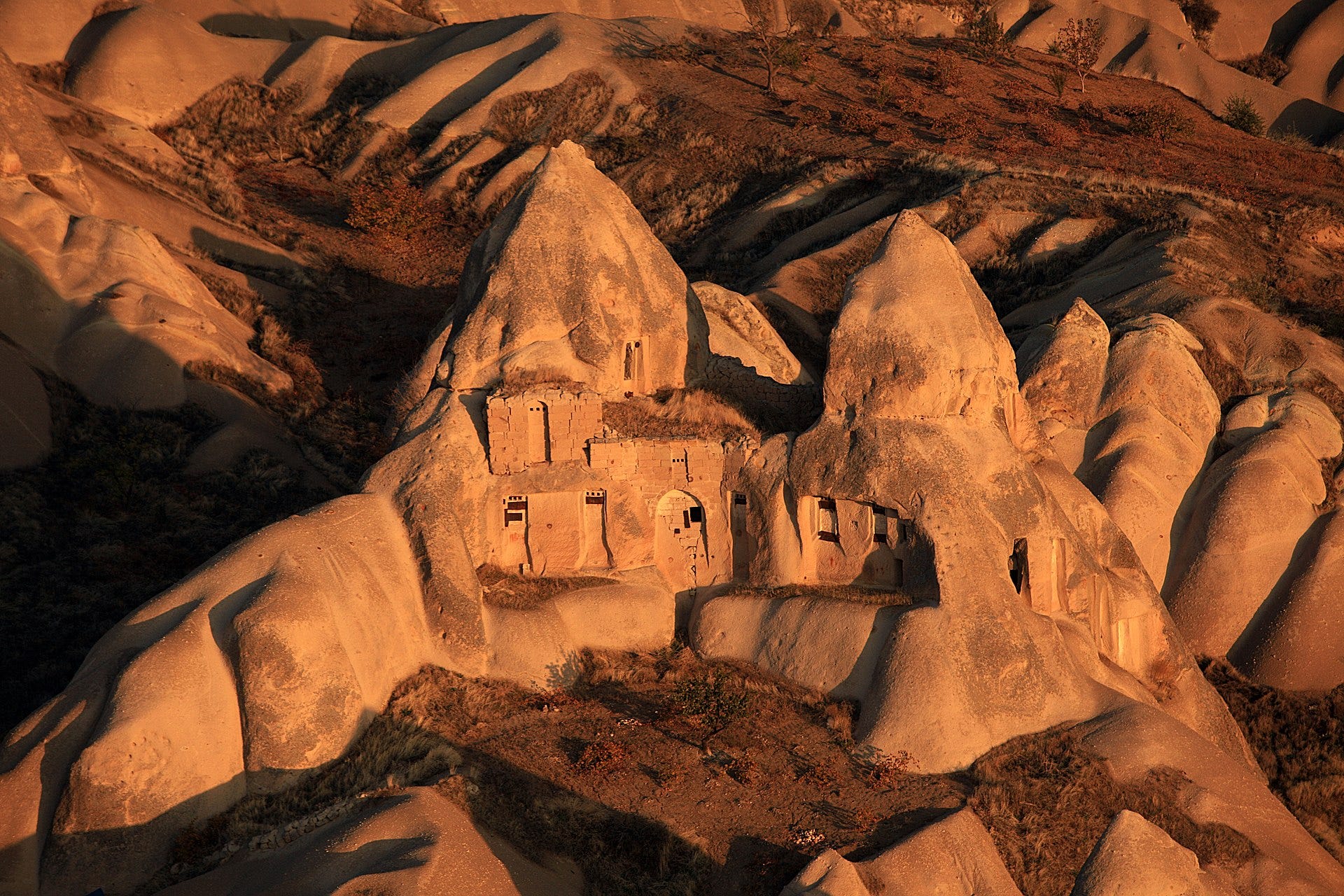
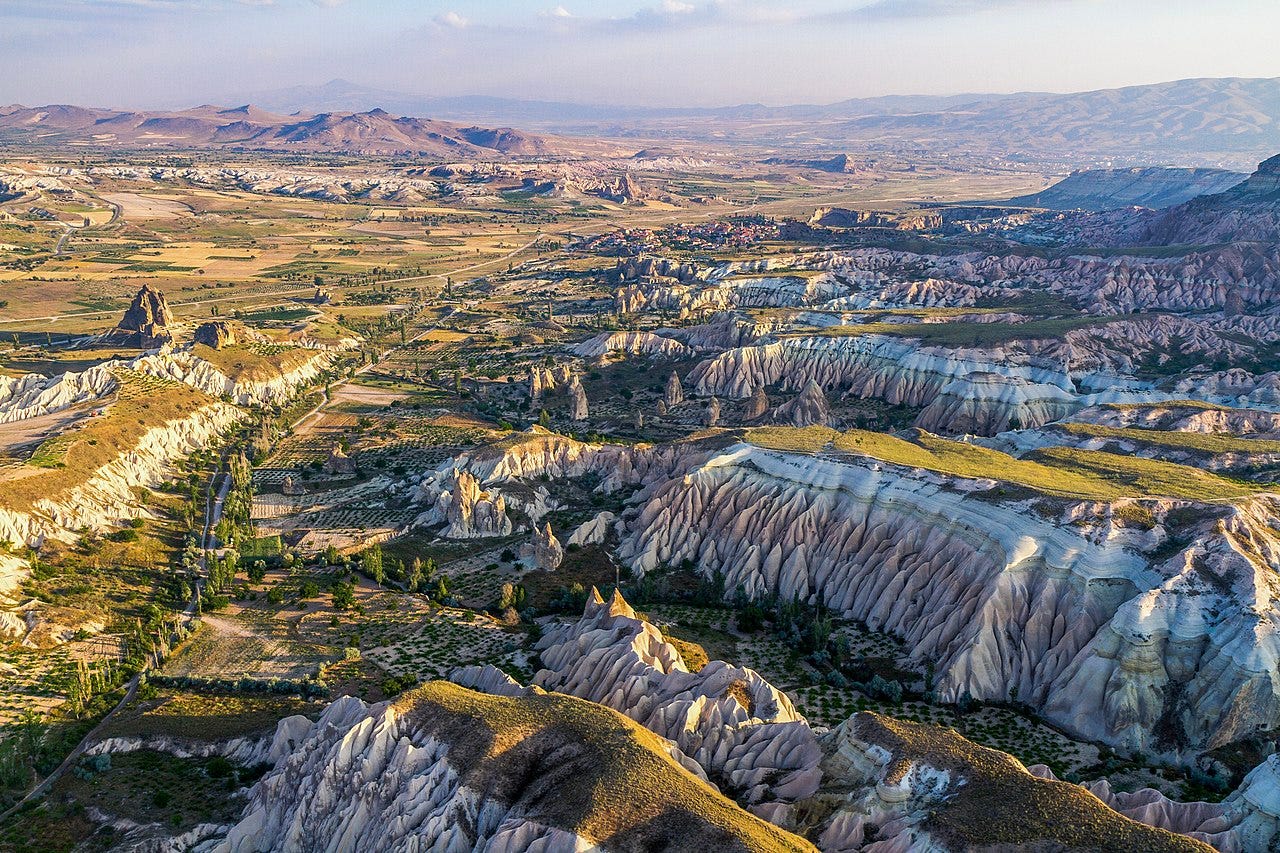
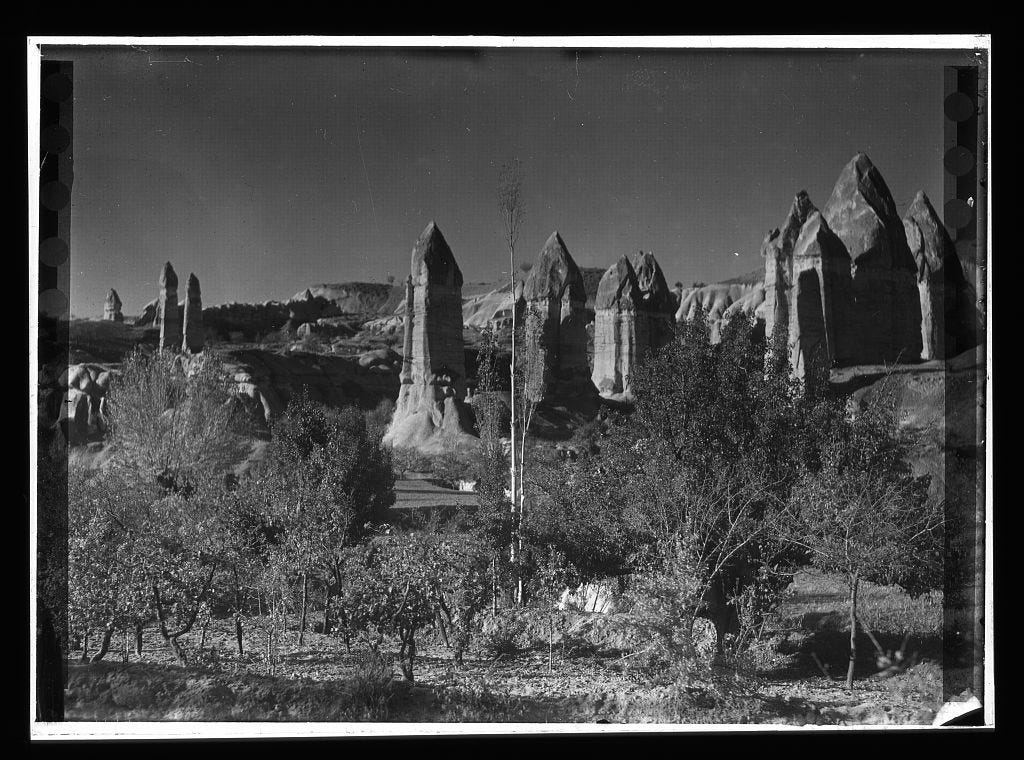
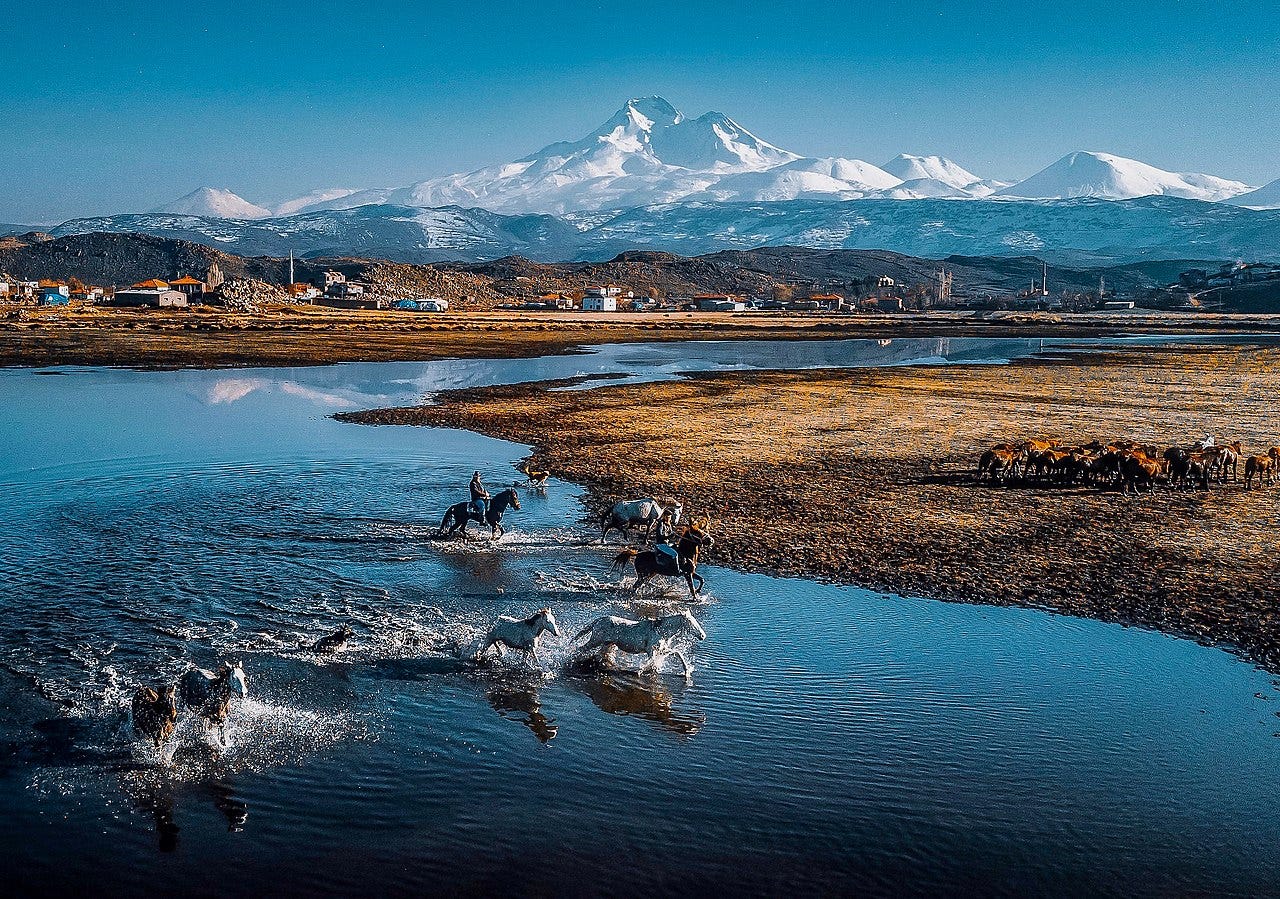
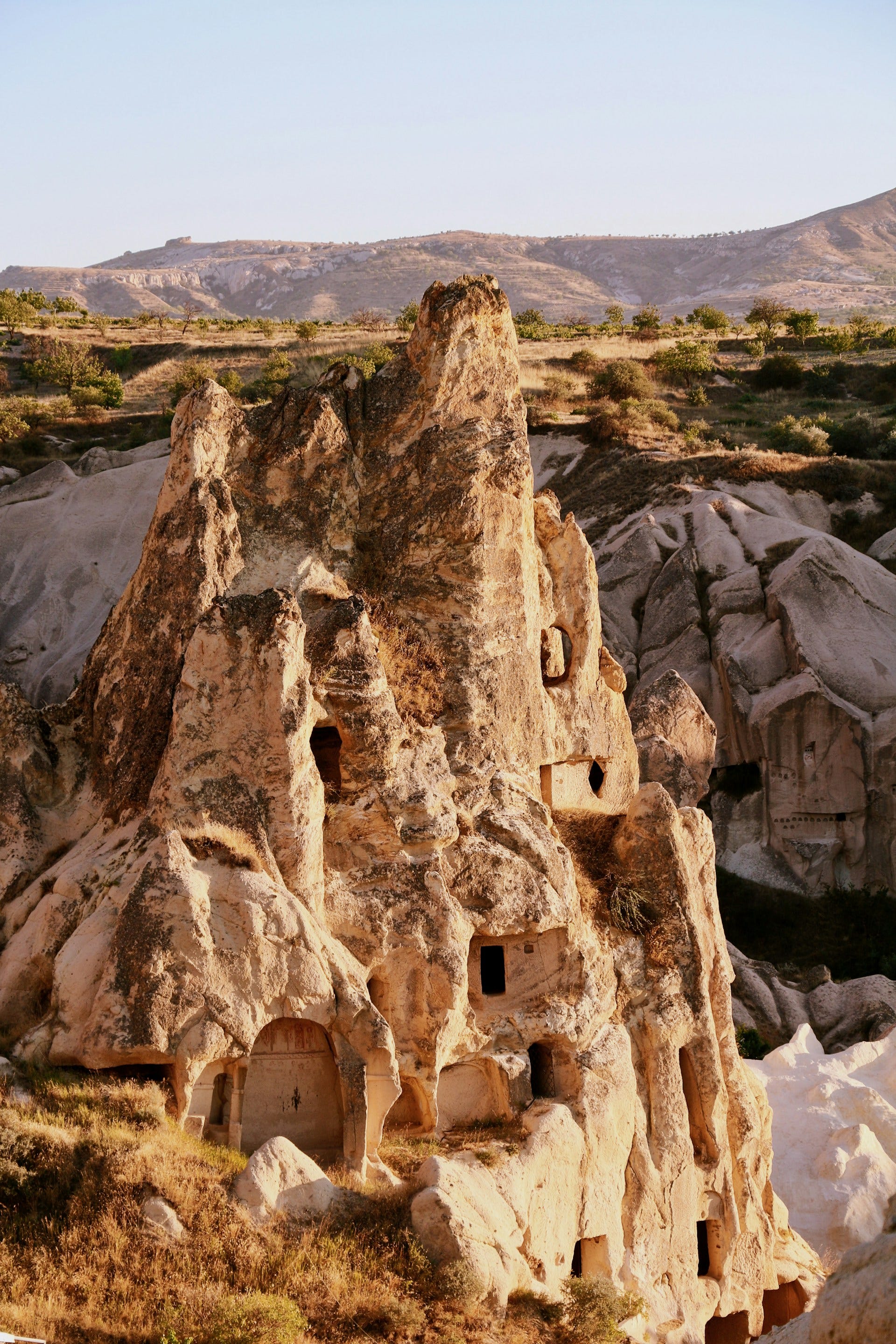
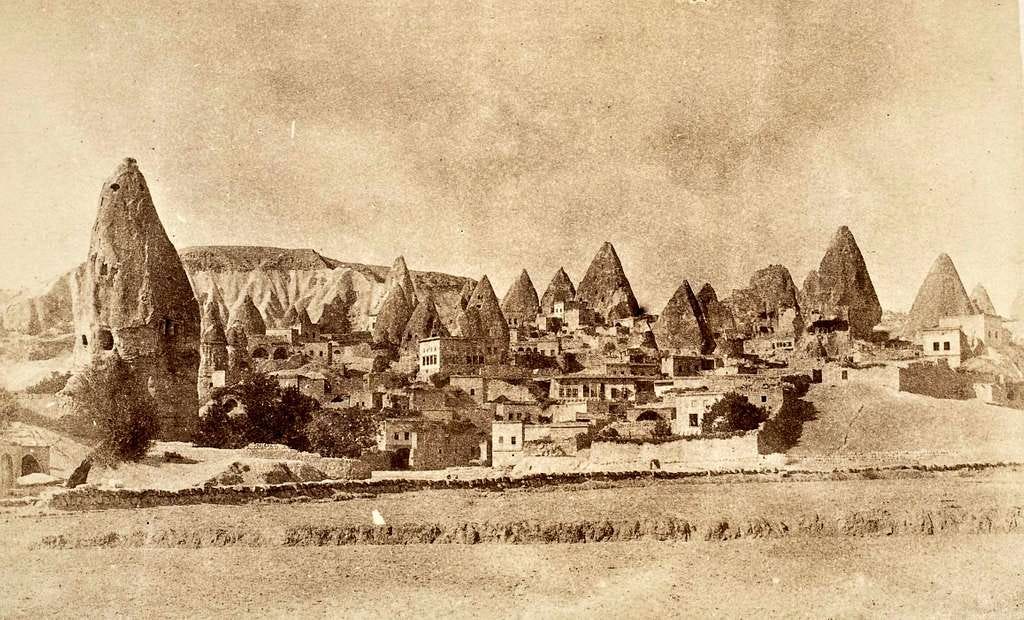
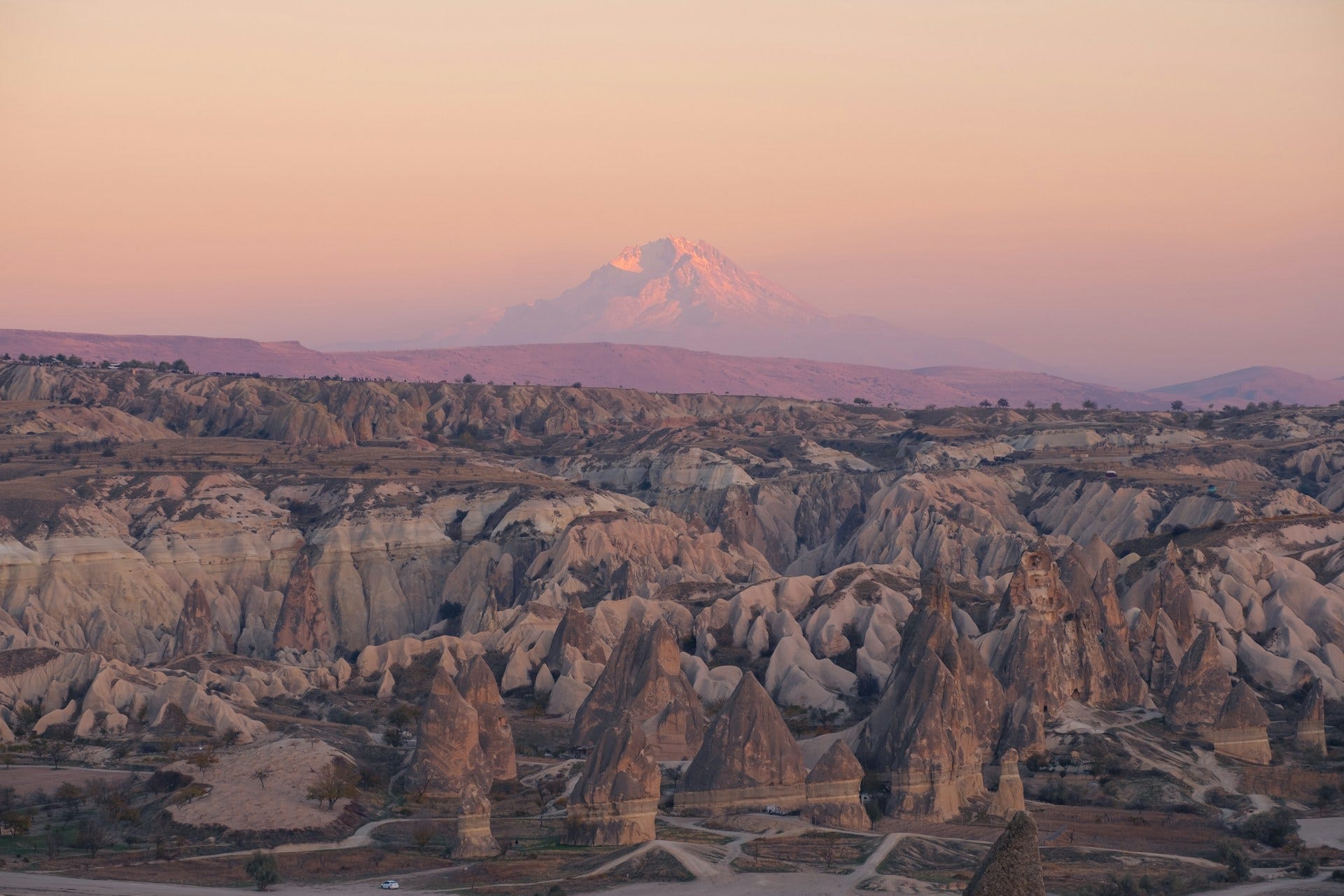
Though Cappadocia hasn’t functioned as a political entity for centuries, it has retained its fame into the modern age as a site of stunning natural beauty. Travellers come from the world over to see its ‘fairy chimney’ rock formations, early Christian churches, Byzantine frescos, and early-dawn balloon rides.

I. In Art
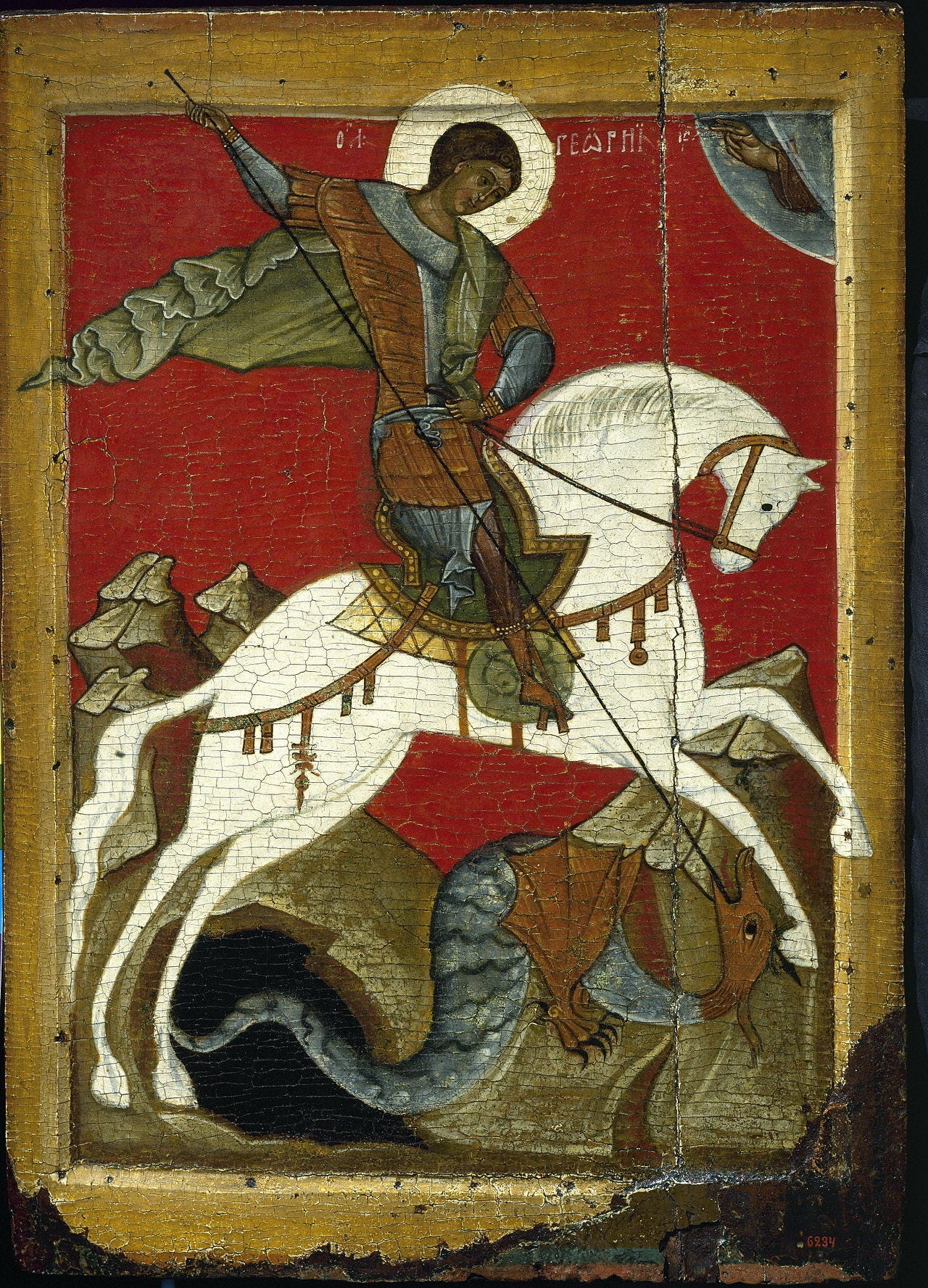
Very little is known for sure about the patron saint of England, Bosnia and Herzegovina, Ethiopia, Ukraine, Georgia, Malta, the Spanish regions of Catalonia and Aragon, and the city of Moscow1; a point made clear by the very pope who canonised him in 494 AD. Pope Gelasius I said George was among those saints “whose names are justly reverenced among men, but whose actions are known only to God.”
The Greek tradition has George as born to a Cappadocian Greek father, and a mother from Lydda (now Lod) in Palestine. Supposedly, after his father died his mother took him from Cappadocia to her home city, where he eventually became a Roman soldier (some sources say he rose as high as the Praetorian Guard). A Christian, he was ordered to renounce his faith; George refused, and was decapitated. Some say he was executed in Nicomedia (an ancient Greek city in what is now Turkey) as part of the Diocletian Persecution of 303 AD, while others say it must have been before 290 AD in his home city of Lydda. The latter is more consistent with the fact that the earliest veneration of St George seems to have emerged in Palestine (his remains are said to lie in the Church of Saint George in Lod), though the centre of worship shifted to Cappadocia in later centuries. Veneration of the saint eventually reached Western Europe, where the dragon myth first entered the record in the 11th century via popular medieval romances.
So much of this is disputed, but what we can say for sure is that St George has become one of the most important saints in Christian hagiography. As such there are thousands and thousands of depictions of the great warrior-saint, but I like the above icon because the background actually looks like a Cappadocian landscape, though this is almost certainly a complete coincidence given the painter was from Novgorod in Muscovy (Russia).

II. In Verse
North of Judea now this day appears
On Syria west, and in each city fair
Full many a church of noble fame doth rise.

In Antioch the seat of Syrian kings,
And old Damascus, where Hazael reign'd.

Now Cappadocia Mithridates' realm,
And poison-bearing Pontus, whose deep shades
Were shades of death, admit the light of truth.

In Asia less seven luminaries rise,
Bright lights, which with celestial vigour burn,
And give the day in fullest glory round.

There Symrna shines, and Thyatira there,
There Ephesus a sister light appears,
And Pergamus with kindred glory burns:
She burns enkindled with a purer flame
Than Troy of old, when Grecian kings combin'd
Had set her gates on fire: The Hellespont
And all th' Egean sea shone to the blaze.
— Hugh Henry Brackenridge, excerpt from A Poem on Divine Revelation (1774)
Hugh Henry Brackenridge was a Scottish-American writer, lawyer, judge, and revolutionary. After emigrating to Pennsylvania at the age of five, he attended Princeton as a young man, where he met and befriended James Madison and Philip Morin Freneau — the latter of which he would cowrite what was perhaps the first ever work of prose fiction written in America, Father Bombo's Pilgrimage to Mecca. During the American Revolutionary War, Brackenridge served as a chaplain, giving fiery sermons to George Washington’s troops. After independence, he moved to Pittsburgh where he founded what is now the University of Pittsburgh and the Pittsburgh Gazette.
The excerpt above comes from a little known poem which he recited at the 1774 Public Commencement at Princeton University. In a sign of the intellectual swirl that defined this period in the Thirteen Colonies, in this letter from William Bradford to James Madison describing the First Continental Congress in 1774, Bradford enclosed Brackenridge’s poem. While he thinks it has a certain merit, he writes: “I am afraid he has published it at an improper time; the political storm is too high for the soft still voice of the muse to be list[e]ned to.”
The Mithridates mentioned in the poem is almost certainly Mithridates VI, a Persian King of Pontus (a historical kingdom in Asia Minor which held Cappadocia at the time) from 120 to 63 BC. He became one of the Roman Republic’s most formidable enemies, thwarting their attempts to dominate the Black Sea region for many years. Eventually Pompey routed him at the Battle of Lycus, whereupon Mithridates fled north, and, as the poem alludes, tried to poison himself. It didn’t work, so he fell upon his sword instead. Soon after, Cappadocia became a Roman province, which it would remain for the next thousand years.

III. In Cartography
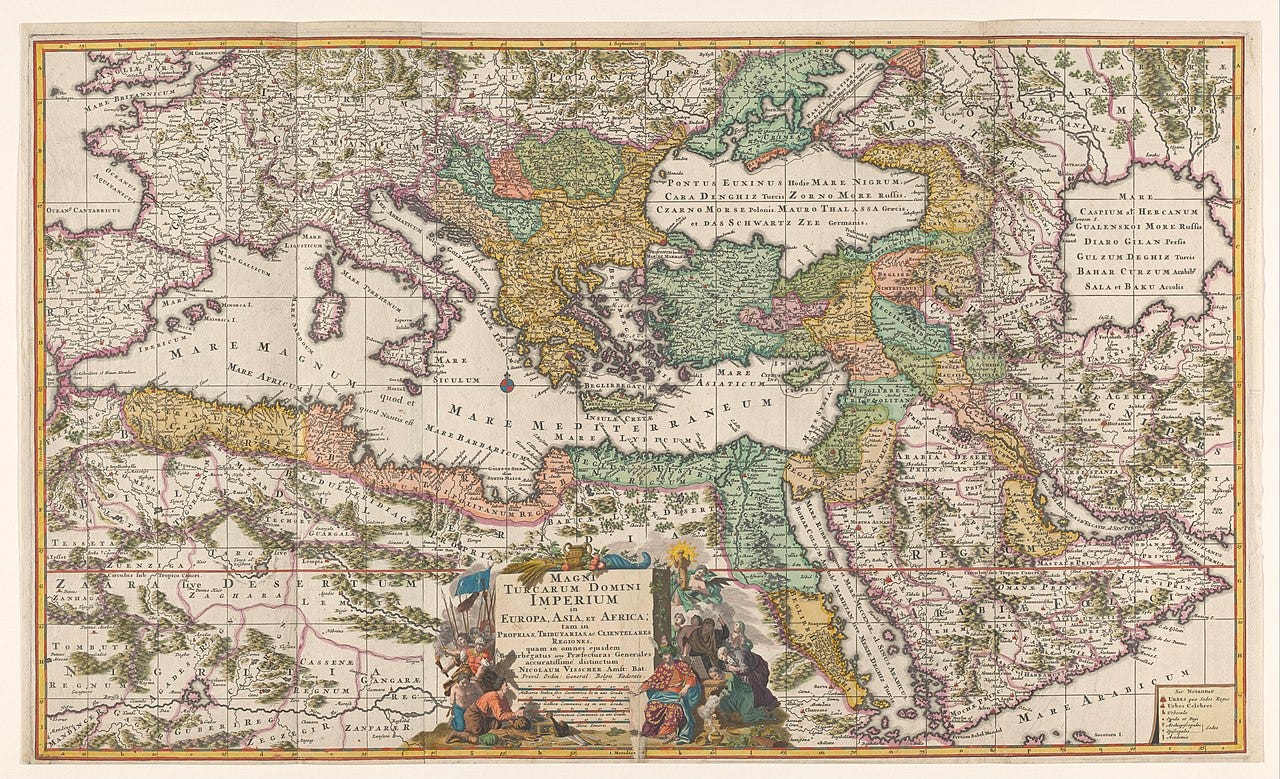
Nicolaes Visscher I was the second in the line of three generations of Dutch Golden Age cartographers. His map of the sprawling Ottoman Empire was drawn at a time of extreme paranoia in Christian Europe. The Turks had been steadily encroaching further and further into the continent since the Fall of Constantinople in 1453. As we can see, the Ottomans had gained almost complete domination of the Black Sea region, the Balkans, and Transylvania by the latter half of the 17th century.
It was around this time that a Christian coalition of forces calling itself the Holy League clashed with the Muslim Ottomans in the Battle of Vienna (1683). The defeat stopped the Turks from encroaching further into Central Europe, marking a turning point in their 300 year struggle with the Holy Roman Empire, known as the Ottoman-Habsburg wars.
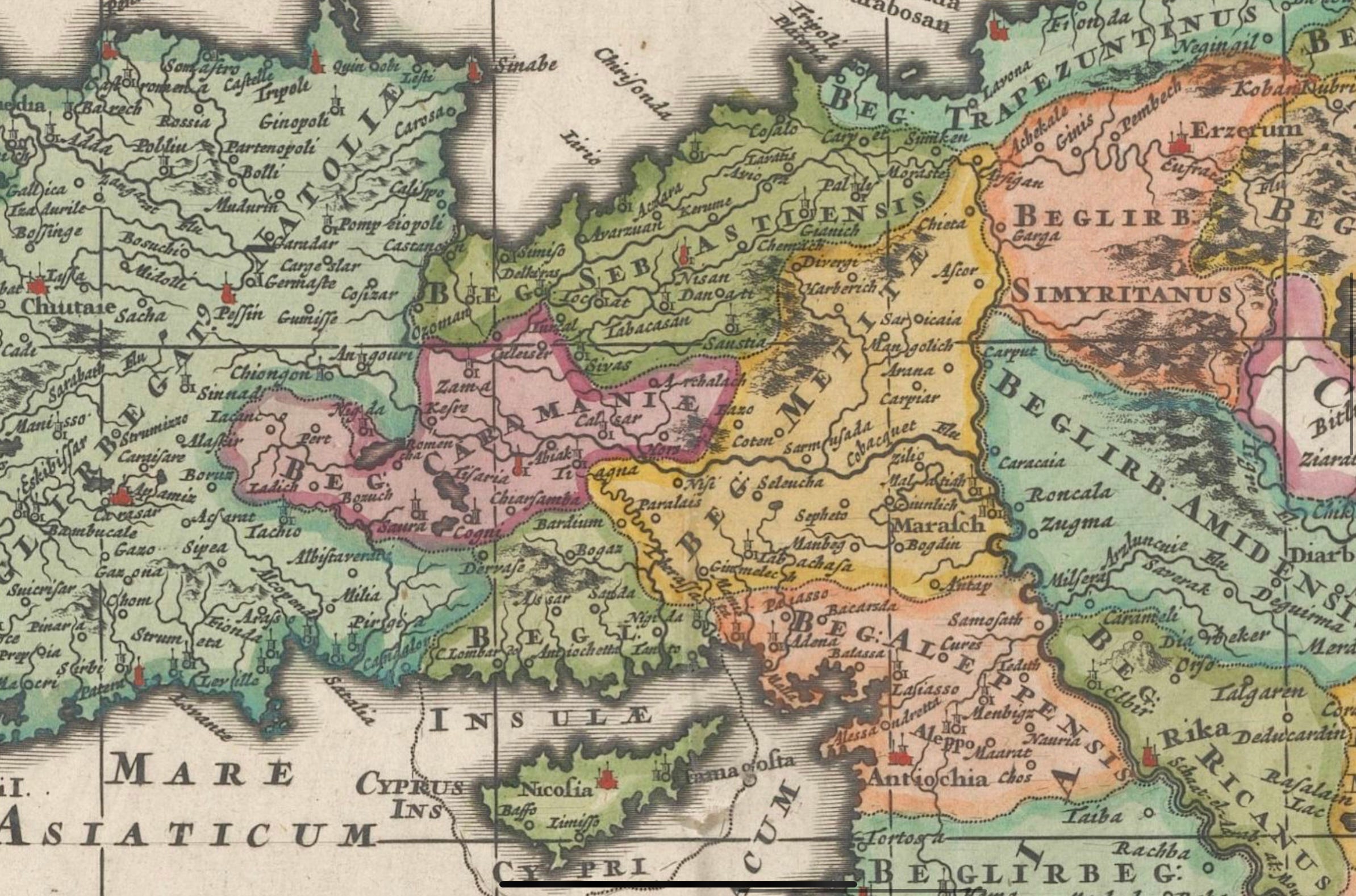
The map’s coloured segments indicate the administrative provinces, or Beylerbeyliks, of the Ottoman empire. The historic region of Cappadocia was not governed as a single entity under the Turks, who instead split it across a few of their provinces. At the centre of the zoomed image of the same map below, Cappadocia would have lain across the pink, yellow, dark and light green segments:

IV. In Literature
Cappadocia constitutes the isthmus, as it were, of a large peninsula bounded by two seas, by that of the Issian Gulf as far as Cilicia Tracheia and by that of the Euxine as far as Sinopê and the coast of the Tibareni. I mean by "peninsula" all the country which is west of Cappadocia this side the isthmus, which by Herodotus is called "the country this side the Halys River"; for this is the country which in its entirety was ruled by Croesus, whom Herodotus calls the tyrant of the tribes this side the Halys River. However, the writers of today give the name of Asia to the country this side the Taurus, applying to this country the same name as to the whole continent of Asia. This Asia comprises the first nations on the east, the Paphlagonians and Phrygians and Lycaonians, and then the Bithynians and Mysians and the Epictetus, and, besides these, the Troad and Hellespontia, and after these, on the sea, the Aeolians and Ionians, who are Greeks, and, among the rest, the Carians and Lycians, and, in the interior, the Lydians.— Strabo, from Book XII, Chapter I of Geographica (7 BC)
Strabo was a Greek geographer, historian, and writer who lived in Roman Asia Minor. Given his proximity, he knew the lands of the Roman province of Cappadocia well, devoting two entire chapters of his seven volume treatise on the geography of the world to the region. He quotes Herodotus, the father of history, who wrote the first ever mention of Cappadocia in his sprawling masterpiece, Histories — the world’s first work of history.

V. In Photography

.jpg)
.jpg)

When he can render no further aid, the physician alone can mourn as a man with his incurable patient. This is the physician’s sad lot.— Aretaeus of Cappadocia, one of the most celebrated ancient Greek physicians

It is fascinating to think that a man who lived and died halfway across the world, six centuries before England was even a thought in Alfred the Great’s head, would go on to become such a symbol of my country. Regardless, when England play in the Euros football tournament this summer, I shall be shouting “FOR ENGLAND AND SAINT GEORGE” at the TV.
Human history is rich, but the geological features alone make me want to take a field trip! Wow!
Fascinating stuff. Might get to visit Cappadocia in a few months myself!